

I remember staring at my email analytics dashboard last year and feeling completely defeated.
I had spent months building my list to over 8,000 subscribers. I was paying a hefty monthly fee to my email provider. I spent hours crafting what I thought were brilliant weekly newsletters.
The result? An open rate of 14%. And a click-through rate that was barely registering.
I was pouring money down the drain. The Return on Investment (ROI) I had been promised by all the marketing gurus simply wasn’t happening. I was ready to declare that “email marketing is dead” and move entirely to social media.
Before I pulled the plug, I decided to treat my list like a science experiment. I spent a month testing every “best practice” I could find. Most of them were garbage. But a few specific strategies completely turned my metrics around. Today, my list is smaller, but my open rates consistently sit above 38%, and my revenue from email has tripled.
If your email ROI is currently flatlining, do not scrap your list just yet. Here are the 7 strategies that actually moved the needle for me.
1. The Purge: Scrubbing the Ghosts (The Hardest Step)
This is the scariest thing you will do, but it is the most important. You have to delete people from your list.
Here is the dirty secret about deliverability: Internet Service Providers (like Gmail, Apple Mail, and Yahoo) judge your reputation based on how your audience reacts. If you send 8,000 emails and 6,500 people ignore them, Gmail’s algorithm flags you as a low-quality sender. Eventually, they will start routing your emails directly to the spam folder for everyone, including the people who actually want to read them.
I used my email platform’s segmentation tool to find everyone who hadn’t opened a single email in the last 120 days. I sent them one final, blunt email: “Do you still want to hear from me? Click here to stay.”
A few clicked. I deleted the rest. I wiped out nearly 4,000 subscribers in one afternoon.
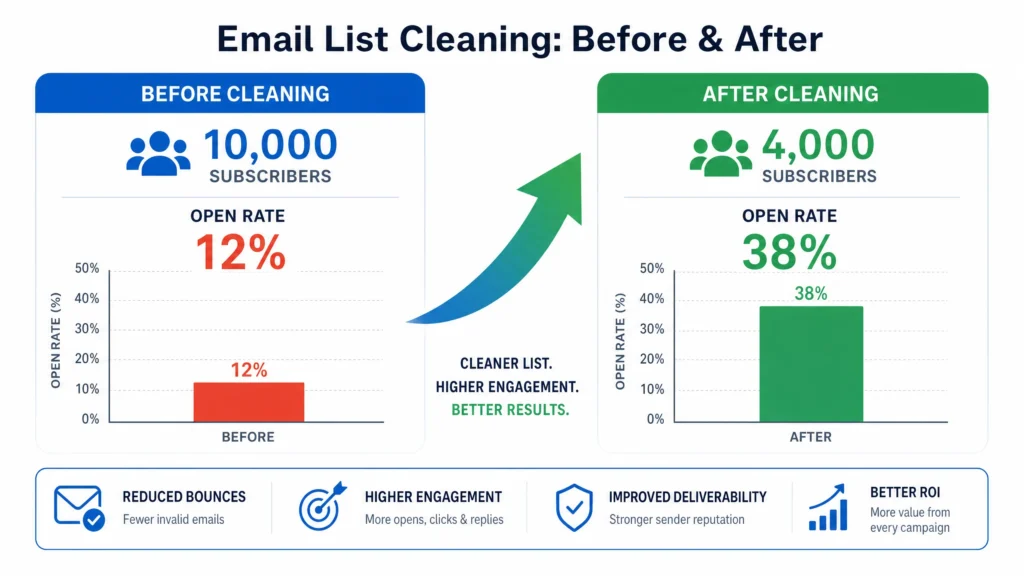
It hurt my ego to see my subscriber count drop, but the results were instantaneous. My open rate skyrocketed because I was only sending to an engaged audience. My monthly software bill went down, and my deliverability reputation was restored. A smaller, engaged list is infinitely more profitable than a massive list of ghosts.
2. Stop Guessing, Start Split Testing
I used to spend twenty minutes agonizing over a subject line, relying purely on my “gut feeling.” My gut was usually wrong.
Your subject line is the gatekeeper. If it fails, the email inside doesn’t matter. I stopped guessing and started using A/B testing for every single broadcast.
Most good platforms have this built-in. I use AWeber, which allows me to test up to three subject lines at once.
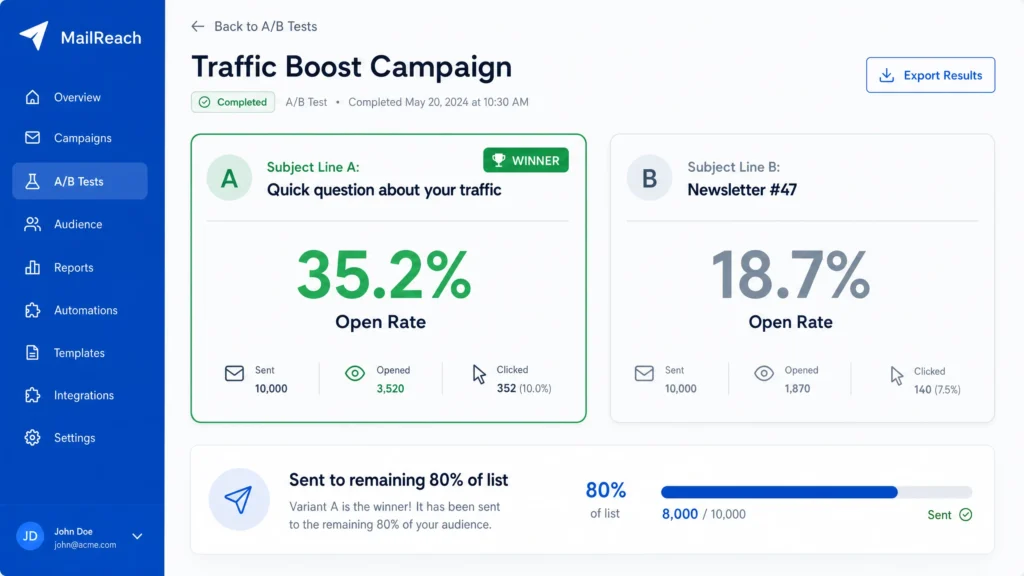
I usually send Variation A (a curiosity-driven subject line) to 10% of my list, and Variation B (a direct, benefit-driven subject line) to another 10%. I let the software wait two hours, see which one gets opened more, and automatically send the winner to the remaining 80%. This data-driven approach removes all the emotion from the process.
3. The Power of Behavioral Tagging
Starting an email with “Hi [First Name]” isn’t personalization anymore. It’s the bare minimum. True personalization means sending people content they actually care about based on their actions.
I used to send every promotional email to my entire list. Unsubscribes would spike every time.
Then I discovered behavioral tagging.
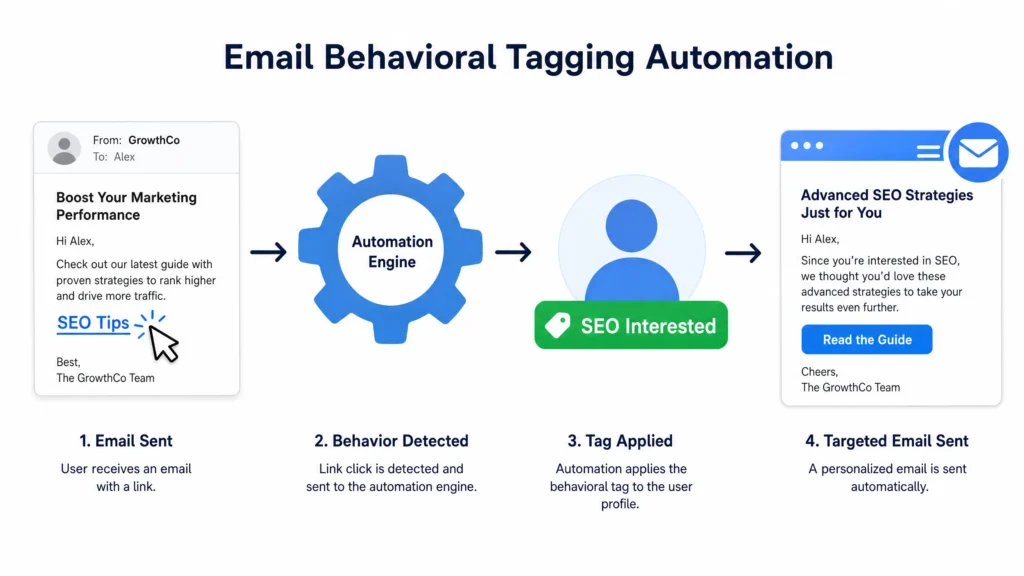
Here is how it works: If I mention a new YouTube video about “SEO Tips” in my newsletter, I set up a rule in AWeber. Anyone who clicks that specific link automatically gets tagged in the backend as “Interested in SEO.”
A month later, when I launch my premium SEO course, I only send the sales pitch to the people with that tag. I don’t bother the people who only care about social media marketing. My conversion rates went through the roof because I was only pitching to warm leads.
4. The 60% Mobile Reality Check
I used to write my emails on a massive 27-inch monitor. They looked beautiful. Then I opened one on my iPhone, and it was an unreadable mess of tiny text and massive images that took ten seconds to load.
Over 60% of all emails are now opened on mobile devices. If your email requires pinching and zooming, the user will delete it in two seconds.
Now, I send a test email to my own phone before I ever hit broadcast. I make sure my paragraphs are no longer than three sentences, and my font size is at least 16px. (Pro tip: if you use AWeber, their templates are natively mobile-responsive, which saves a lot of formatting headaches).
5. The “One Job” Rule for CTAs
A confused mind says no.
I used to send newsletters that asked the reader to read my latest blog post, follow me on Twitter, reply to the email with their thoughts, and buy my new ebook. They usually did none of those things.
Now, every single email I send has one primary goal. One Call to Action (CTA). If the goal is to get them to read a blog post, there is one clear link to the blog post. Nothing else. Tell them exactly what you want them to do next, and don’t distract them.
6. Send Like a Human, Not a Corporation
Look at your own inbox. Which emails do you actually open? The heavily designed, corporate newsletters with 14 images? Or the plain-text emails from your friends?
I stripped away all the heavy branding from my emails. I stopped using corporate jargon. I started writing like I was sending a quick update to a colleague over coffee. I use a conversational tone, I admit my mistakes, and I sign off with my first name. The engagement shift was palpable. People reply to humans; they ignore brands.
Your Tech Stack Matters
If you are going to implement things like automated list scrubbing, A/B testing, and behavioral tagging, you need a platform that actually supports these features without charging you enterprise-level prices.
I wasted a lot of money on platforms that promised the world but delivered a clunky, frustrating experience with terrible customer support. Switching to AWeber was the final piece of the puzzle that allowed me to execute these strategies easily. They offer industry-leading deliverability and transparent pricing.
If you are tired of paying high fees for dismal open rates, you can click here to try AWeber and start implementing these strategies today. Your ROI will thank you.